- Parenting Pitch
- Posts
- How to Raise Active, Healthy Kids (Without Food Fights)
How to Raise Active, Healthy Kids (Without Food Fights)
About 1 in 5 U.S. kids now meet the criteria for obesity. Here’s how to build daily movement and sane food habits without weight talk or guilt.


Travel-Ready Creatine: Peak Performance Anywhere, Anytime

Your routine shouldn’t stop when you’re on the move. Momentous Creatine comes in travel-ready packs of Creapure®️—the gold standard of creatine monohydrate, NSF Certified for purity and safety. No fillers. No artificial ingredients. Just proven performance. Fuel your best with Momentous Creatine. Use code HIVE for 35% off.
Hi there,
Did you know that ~15 million kids and adolescents in America are currently obese? That's nearly 21% of the kids’ population.
After watching my own kids and talking with other parents made me realise that the conversation around ‘fit kids’ has gotten completely twisted. We're so focused on weight and appearance that we're missing what actually matters.
In this issue, I will share what "fit kids" really means and the simple changes that work without turning your home into a boot camp or your dinner table into a battleground. Let's get started!
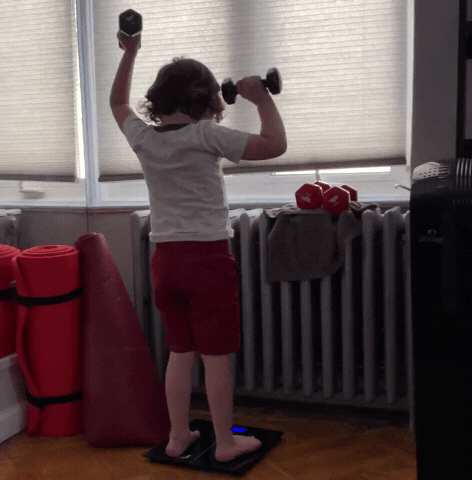
What "Fit Kids" Really Means
For me, a fit kid is one who has a healthy, positive relationship with their body. Understands nutrition without obsessing over every bite. Sees daily movement as fun, not punishment.
I look for three things:
Does my child have energy that lasts through the day?
Can they take on school, play, and life without feeling drained?
Do they enjoy being active instead of dreading it?
That's fitness for kids.
Why It's So Much Harder Now
Raising active kids today feels like an entirely different game than when we were growing up.
Back then, “Go outside and knock on a friend’s door” was the most natural thing in the world. Today, when I suggest that to my kids, they look at me like I’ve lost my mind.
And not to forget schools are also cutting back on the little free play time kids do have.
My younger son in elementary school gets just 20 minutes of recess a day and my middle schooler gets 15 minutes a week.
Is Recess Important for Kids or a Waste of Time? Here’s What the Research Says.
Earlier, movement used to happen naturally. Now it doesn’t.
Which means as parents, it’s on us to be intentional to create those opportunities, to fight for them, to make sure our kids don’t grow up thinking sitting still is the norm.
3 Simple Approaches to Build Movement Into Daily Life
The key is making physical activity feel natural, not like organized "exercise." Here are 3 approaches that actually work:
Family walks after dinner: Make it a family activity, even if it is for 20 minutes. It's the easiest thing you can do, and it becomes a habit for everyone.
Link screen time to movement: If they move for 15-20 minutes, they get 20 minutes of screen time. This works well with younger kids especially. With older ones we got to be more creative because the resistance is going to be higher in most cases.
Be the role model: This is the most powerful tool you have. My husband will say "I'm going to play tennis, come sit and watch." Inevitably, they end up running around, playing nearby, moving without being told.
There's research backing this up, active parents lead to active kids, and active kids become active adults. Read here!
Let’s Talk Nutrition
You're dealing with picky eaters where sometimes you just need them to eat anything.
You pack a healthy lunch, but your middle schooler buys fries at the cafeteria anyway because that's what all the other kids are doing.
Here's my approach, I can't control what happens at school, but I can supplement when they're home. When my son comes back after I know he's eaten cafeteria food, I make him have a protein shake.
The goal is to do what you can when you can.
PRO TIP: Make kids part of the food preparation. When they’ve made it, they want to eat it. Give them small, easy wins with simple recipes, prep-ahead snacks, dishes they can proudly say, “I made this.”
That confidence fuels their appetite, and builds lifelong habits.
PS: Here are 68 Easy Recipes Your Kids Can Make Themselves.
When Girls Quiet-Quit Sports (11–12)
I’m noticing a troubling pattern in girls…
They are active when they’re young, but around 11–12, many start stepping away from sports. They often drop out of movement altogether. And once activity stops, it’s hard to build it back.
One solution for this is to make it a family experiment.
A friend of mine joined karate only because her daughters were taking it. Suddenly, training turned into laughter, teasing, and bonding.
The trick is to try different options until something sticks: hiking, yoga, pilates, gym workouts. It doesn’t need to look like traditional sports.
If we don’t give girls more diverse, fun, and low-pressure ways to move, we risk losing them to inactivity at a crucial age. What matters isn’t what they choose. It’s that they keep choosing movement in some form.
Why Girls Quit Sports (And How to Make Sure That's Not Your Daughter!)
For Busy Working Parents
I get it. Life is packed.
Two working parents. Multiple kids. Barely enough time to breathe, let alone add more to the calendar. But here’s the good news, helping your kids move more doesn’t require an overhaul. Just small shifts like:
Bring them into the activity you’re already doing even if it’s just twice a week.
Turn weekends into family movement time, whether it’s a walk, a bike ride, or a game in the park.
Also, it's okay to delay homework a little bit to prioritize physical activity. Health is more important than getting everything done perfectly on time.
What to Stop Doing Right This Instance…
Raising healthy, active kids is about mindset. Here are 4 shifts that make all the difference:
Stop body commentary: Too thin, overweight, both plant the same seed, insecurity. Instead, focus on strength, energy, and how movement makes them feel.
Expand the definition of sports: Not every child will love football or cricket. That doesn’t make them “less active.” Dance, swimming, cycling, martial arts, etc- movement has many doors.
Prioritize joy over perfection: The aim isn’t perfect form or medals. It’s building habits, confidence, and positive associations with movement. Something they’ll carry for life.
That’s all for today’s issue, parents! 💗
Inside the Laid-back Parent’s Internet History this week:
What's your biggest challenge with keeping kids active? |
Note for My Fellow -Back Parents 📧
Building healthy habits doesn't require turning your family upside down. Small, consistent changes like a walk after dinner, kids helping with food prep, trying one new activity, etc add up to big differences over time.
The goal is to raise kids who see movement and good nutrition as normal parts of life.
See you next week,
Lakshmi 💛
